Have you heard of the trope Hurt/Comfort?
The term was coined by the fanfiction community to describe a scene where one character experiences some kind of hurt, physical or emotional, and another character comforts and supports them physically or emotionally. Think of bedside vigils, post-nightmare cuddles, and rescuing the injured.
When it is done right, Hurt/Comfort scenes can be the most cathartic and inspiring. #Sam&Frodo
Now, this is an article about Edo Japan, so what does Hurt/Comfort have to do with anything?
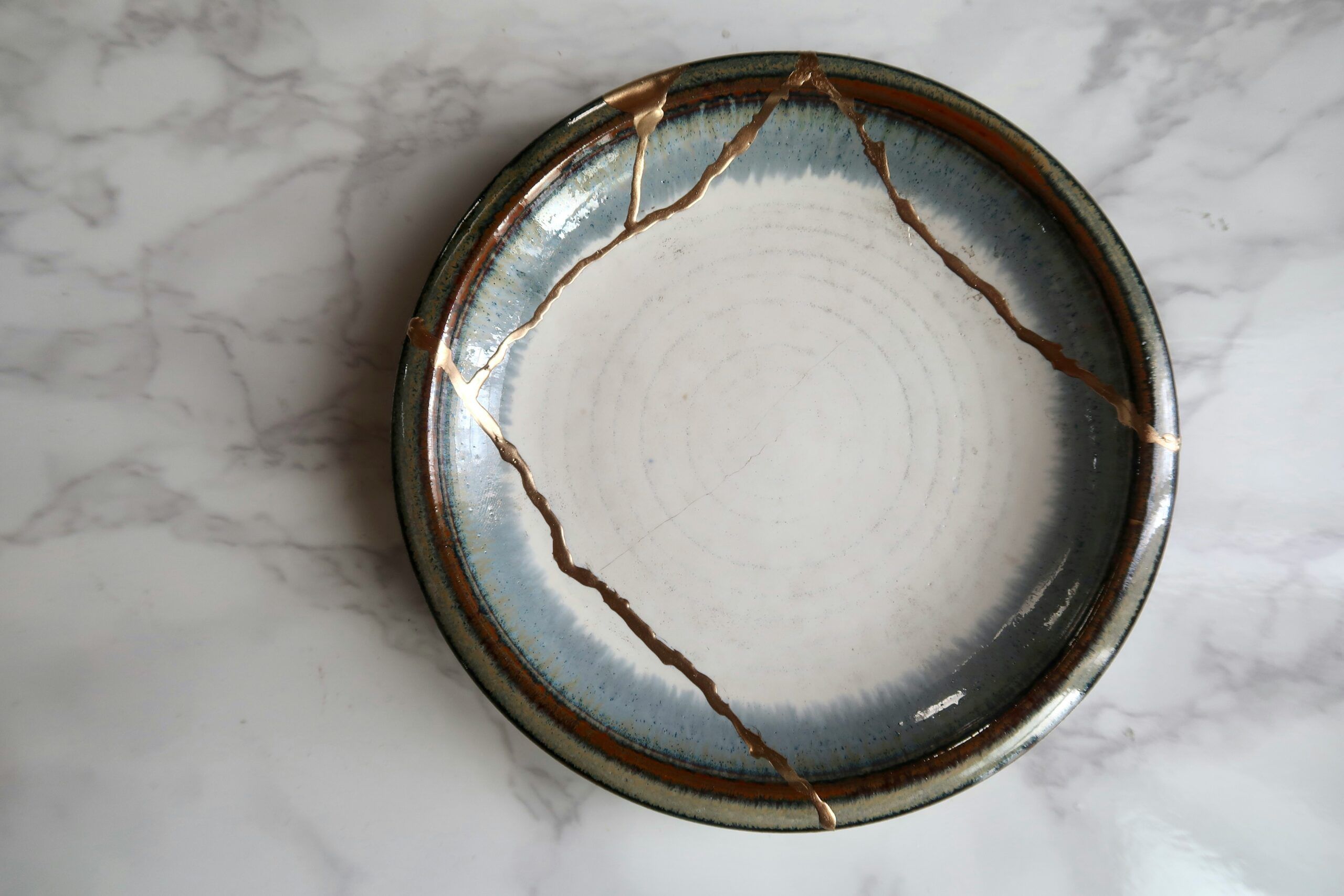
There is a profound Japanese art form called kintsugi which literally means “to mend with gold.” It emerged in the Edo period and it embodies a philosophy on trauma and healing – hurt and comfort.
Allow me to explain.
Dishes were valuable pieces of art to begin with. Tea bowls often had beautiful designs. Eventually though even the most revered dishes break. In Rome these may have been put back together with wax and repainted to look “good as new.” In America they would probably just be tossed.
Not so in Edo Japan. The Japanese know (perhaps because of their years of painful civil war) that a thing once broken can never be the same as before.
But broken doesn’t mean the pottery is worthless—or even worth less. It can still be fixed.
The Kintsugi Master’s Process
Step One: The kintsugi master receives the broken pottery from the client along with payment. He promises to fix it but asks the client not to expect a specific time frame.
Step Two: The broken pieces are placed on a shelf in the workshop and allowed to rest. Every day, the master sees them, but he doesn’t rush to fix them. He just beholds the trauma and comes to intimately know each sharp corner and brittle edge. This step might take weeks. Or it might take years.
Step Three: The master fits the pieces back together and cements them in place with strong glue.
Step Four: Pulverized gold dust is carefully pressed into the wet glue seams to highlight rather than hide them.
Step Five: The gold-mended pottery is presented to the client, whole and sparkling with rivers and mountain peaks of gold.
The beauty of kintsugi is that it turns trauma into treasure so thoroughly that the mended bowl is more valuable because it bears both gold and the craftsmanship of two masters.
The Takeaway
My friend, remember this:
No matter the breaking you’ve suffered, you are not worthless or even worth less. You can be healed.
But just like kintsugi, healing isn’t about hiding your trauma. It isn’t about trying to get back to the person you were before the trauma. It isn’t even about calling your trauma good, or not real, or not that bad. It’s about becoming something new, stronger, and more beautiful and costly than before.
The novel I’m currently researching for is code named “Project Sparkle Cup.” It gets it’s code name because of its central theme on healing. There also may or may not be a few kintsugi easter eggs in the plot. I’m really excited to see the heart of this project begin to take shape.
Thanks for checking out my research notes. Before you go, have you ever been “mended with gold”? I’d love to hear your story and any advice on healing you learned along the way.
*Sincerely,
Kasumi Sonoda
*Bonus Pottery Fact: The word “sincere” comes from the Latin “sine cera” meaning “without wax” and originally applied to pottery. Back in the day, dishonest merchants would fill cracks in their pottery with wax and paint over them to look flawless. When the customer took the vessel home the wax would melt, or the cracks would split under stress revealing both the merchant and the vessel’s lack of integrity. The term “sine cera” began to mean honest, genuine, or free from pretense.